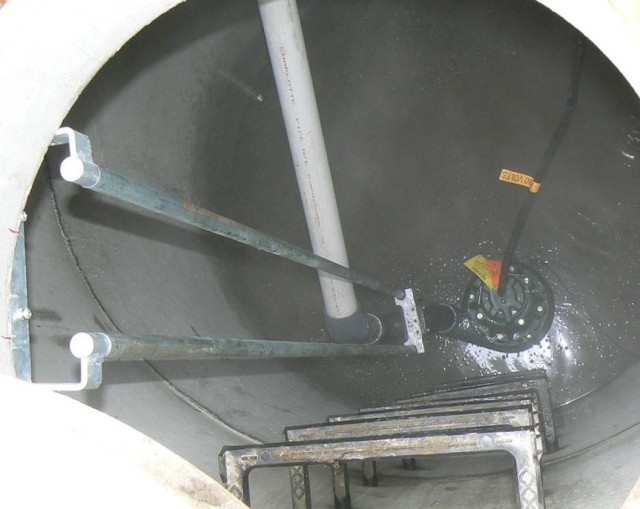
AG - Agricultural Waste Management
Agricultural Waste Management is the management of on-farm generated wastes in an environmentally, economically, and agronomically responsible manner, addressing manure, milkhouse waste water, barnyard water, silo leachate, and other organic wastes as needed. One of the goals of agricultural waste management is to utilize the waste by recycling it through soil and plants. Waste can be collected, stored, and then spread on the land. Proper nutrient management planning helps ensure waste is applied to the land at rates that won't contribute to nutrient pollution problems in nearby waterways. Wyoming County Soil and Water Conservation District has assisted with numerous agricultural waste management systems. Scroll through the photos below to see a few examples of projects.
Examples of Local Ag Waste Projects
Steel Manure Tank
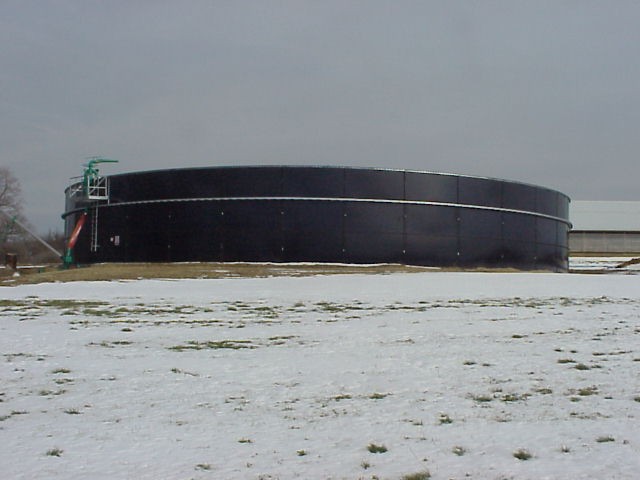
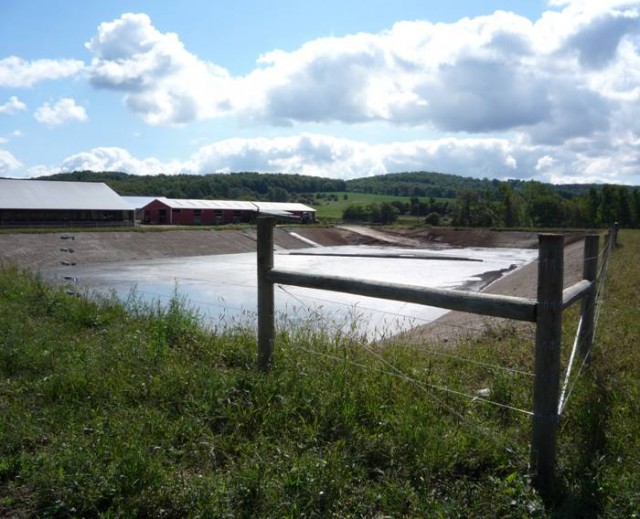
Earthen Manure Storage
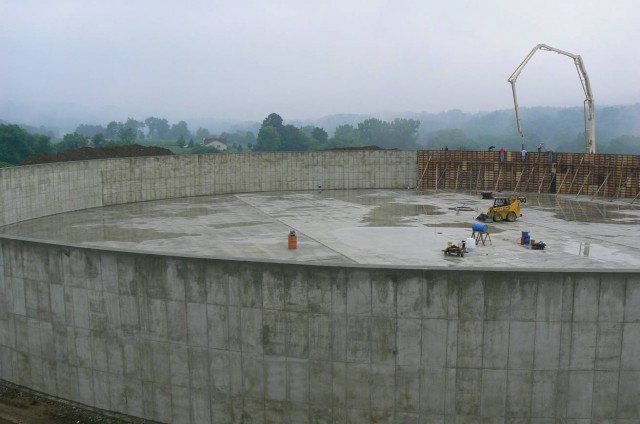
Construction on Concrete Manure Storage
Silage Leachate Collection System
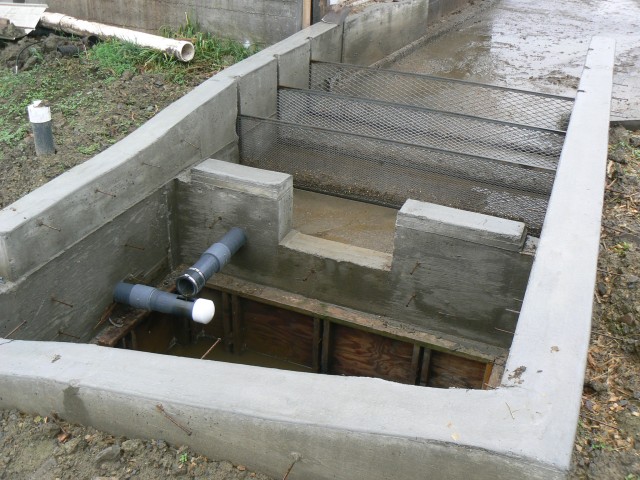
Milkhouse Waste System